In the competitive landscape of local search, understanding your Google Maps visibility across different locations is crucial for business success. Traditional rank tracking methods that check only one location provide an incomplete picture of your true market reach. Modern SEO professionals now rely on comprehensive, grid-based tracking systems to analyze local search performance and identify optimization opportunities across entire service areas.
How SEO Services Monitor and Improve Google Maps Visibility
A practical, in-depth guide to understanding grid-based rank tracking, why Google Maps rankings change from one location to another, and how local businesses can identify visibility gaps across their service area. This article explains what influences local ranking variation, how to interpret map-based ranking data, and what to optimize for stronger, more consistent Google Maps visibility over time.
Local Maps SEO rank tracking helps businesses understand how they appear in Google Maps across different locations. Instead of relying on a single ranking position, grid-based tracking provides real visibility into ranking gaps and competitor dominance across a service area. This article explains how local maps SEO tracking works, why it matters, and how tools like GTrack are used to analyze and improve Google Maps performance.
Businesses that depend on local customers cannot rely on a single Google Maps ranking. Search results vary based on distance, competition, and search context. Because of this, professional SEO services use location-based rank tracking to understand where a business is visible, where it is not, and how competitors influence local results.
This guide explains how SEO services monitor Google Maps visibility using grid-based rank tracking, competitive analysis, and ongoing optimization. It breaks down why rankings change across locations, how map-based data is interpreted, and what businesses typically optimize to achieve stronger and more consistent local visibility.
Why Local Maps SEO Matters for Your Business
Local Maps SEO helps you capture customers at the moment they are ready to buy. If you do not understand where you rank, you cannot reliably improve visibility, calls, foot traffic, and conversions.
In today's digital landscape, local SEO success depends heavily on your visibility in Google Maps and local search results. When potential customers search for businesses like yours, Google shows results based on distance, relevance, and prominence. That means your ranking can change across neighborhoods, even within the same city.
SEO services focus on Maps visibility because rankings are not static. A business may rank well near its physical location but disappear only a few kilometers away. Understanding these variations is critical for building an effective local SEO strategy.
Precision Local Tracking
Boost Local Visibility
Outrank Competitors
Maximize ROI
How SEO Services Monitor Google Maps Visibility
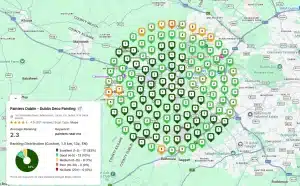
Professional SEO services monitor Google Maps visibility by tracking rankings across multiple geographic points. This approach reveals how proximity, competition, and local relevance affect search results. Instead of checking one location, grid-based tracking maps visibility across an entire area.
This monitoring process works alongside foundational optimization, such as proper Google Business Profile setup. Your Google Business Profile is often the first touchpoint between your business and customers in local search. A complete profile improves trust, click-through rates, and ranking potential.
Key Insight
Local Maps SEO is not about ranking once. It is about maintaining visibility across neighborhoods, service zones, and customer locations. This is why SEO services rely on map-based tracking rather than single-position checks.
The Power of Local Maps SEO in Modern Marketing
Local maps SEO has become a cornerstone of successful local marketing strategies. When someone searches for a service nearby, the businesses shown in Maps often get the first calls and visits. That is why tracking is so important. If you only check one location, you can miss the real picture of where customers can or cannot find you.
In modern local search, visibility in Google Maps often determines which businesses receive calls, visits, and enquiries. Google prioritizes businesses that appear relevant and prominent within a specific geographic context, making location-based tracking essential for understanding true market reach.
Google Maps vs Local Pack Visibility
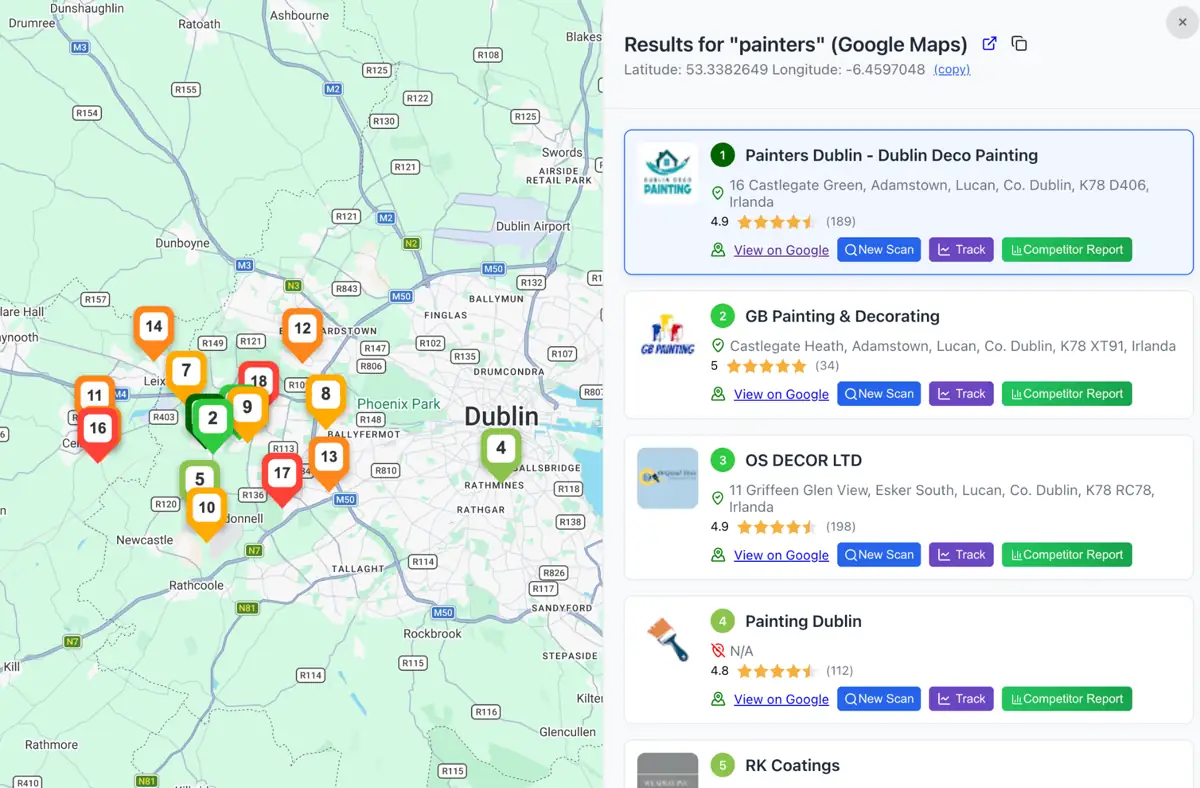
SEO services distinguish between Google Maps and Local Pack results because they behave differently. Understanding the difference between Google Maps and Local Pack matters because they can behave differently. The local pack often shows three businesses, while Maps can show more results and more filtering. Tracking both helps you understand where visibility is strongest.
Key Local Maps SEO Success Factors
The Role of Reviews in Local Maps SEO
Reviews are another major driver of local performance. The impact of reviews goes beyond conversion. They influence clicks, engagement, and local prominence signals. SEO services treat review generation and management as a long-term ranking signal. If you want deeper context, read The importance of Google Reviews and apply those concepts consistently over time.
Advanced Local Maps SEO Strategies for 2026
Local maps SEO continues to evolve as Google refines local ranking signals and user behavior shifts. A strong strategy is not one single tactic. It is a consistent execution, measurement, and iteration based on what the map data shows.
SEO services preparing for long-term Maps visibility focus on stability and risk prevention. One critical area many businesses overlook is preventing and recovering from suspensions. A suspension can remove your visibility overnight. If you want prevention tips and recovery steps, see the Google Business Profile suspension.
Improving Google Maps rankings requires a structured approach across your profile and your local presence. For a tactical framework, review Optimizing your Google Business Profile for Maps rankings and apply the actions that match your category and service area.
Essential Local Maps SEO Optimization Checklist
Supporting Channels and Paid Visibility
Paid visibility can complement organic progress. Local advertising options like Google Local Services Ads can help generate immediate leads while your long-term organic visibility continues to grow. The key is evaluating whether paid placements align with your service category, competition level, and profit margins.
Review generation is also a long-term advantage when it is consistent and ethical. Businesses that build a structured process for asking satisfied customers for feedback tend to see stronger reputation growth over time. A repeatable system for collecting reviews not only improves visibility but also increases trust and conversion rates.
To strengthen your entire local search footprint, combine ranking data with broader actions like citations, on-page improvements, and category alignment. A useful set of ideas is here: strategies to boost local SEO rankings.
Applying Local Maps SEO Rank Tracking in Real-World Scenarios
Local maps SEO success is easier to manage when you treat it like a system. Track visibility across locations, identify where you lose rankings, and tie improvements to measurable changes in the grid. This approach helps you avoid guesswork and focus on what actually moves the needle.
Whether you are a small business owner, an agency, or a multi-location brand, grid-based tracking makes it easier to measure progress and react quickly to competitor shifts. In practice, tools like GTrack are used to visualize performance, monitor trends, and keep local SEO work aligned with outcomes.
If you want to see how grid-based tracking looks in a real workflow, you can explore the tool here and compare it to your current process.
Final Takeaway
SEO services improve Google Maps visibility by measuring rankings across locations, identifying weak areas, and applying structured optimization over time. Businesses that understand how local rankings vary are better positioned to build sustainable local search visibility and outperform competitors across their service area.
Frequently Asked Questions
1. Why do Google Maps rankings change from one location to another?
Google Maps rankings vary by location because Google considers proximity, local competition, and search context. A business might rank well near its physical location but drop significantly just a few kilometers away, where competitors have stronger local signals or closer proximity to the searcher.
2. What is grid-based rank tracking, and how does it work?
Grid-based rank tracking monitors your Google Maps rankings across multiple geographic points simultaneously, creating a "grid" or map of your visibility. Instead of checking just one location, it reveals ranking patterns across neighborhoods, showing where you're strong and where visibility drops off.
3. How often should businesses track their local Maps SEO rankings?
Most businesses benefit from weekly or bi-weekly tracking to identify trends and competitor movements. However, businesses in highly competitive markets or those running active local SEO campaigns may need daily tracking to catch ranking shifts quickly and respond to changes.
4. What factors most influence Google Maps ranking variations across locations?
The main factors are distance from the business location, local competition density, NAP consistency, review signals, and category relevance. Areas with fewer competitors often show better rankings, while dense commercial zones require stronger optimization to maintain visibility.
5. How can businesses improve their Maps visibility in areas where they rank poorly?
Focus on building local citations in those specific areas, encouraging reviews from customers in weak zones, optimizing for neighborhood-specific keywords, and ensuring your Google Business Profile accurately reflects your service area. Location-based content and local link building also help strengthen visibility in target areas.