Local SEO helps businesses get found by nearby customers at the exact moment they are searching for products or services. By optimizing your business information, website, reviews, and local visibility signals, you can appear in map results and location-based searches where real buying decisions happen. In this guide, you’ll learn what local SEO is, how it works, and what steps help businesses improve their local rankings consistently. If you're new to this topic, understanding how local SEO works will help you see why visibility shifts across neighborhoods and search intent.
What Is Local SEO?
In a competitive digital landscape, local SEO is no longer just “add a city name to your website and hope for the best.” Modern local visibility depends on how search engines evaluate relevance, proximity, and trust, and how rankings shift across neighborhoods, devices, and search intent.
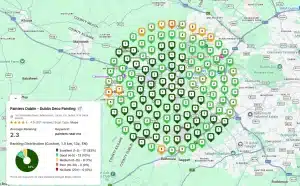
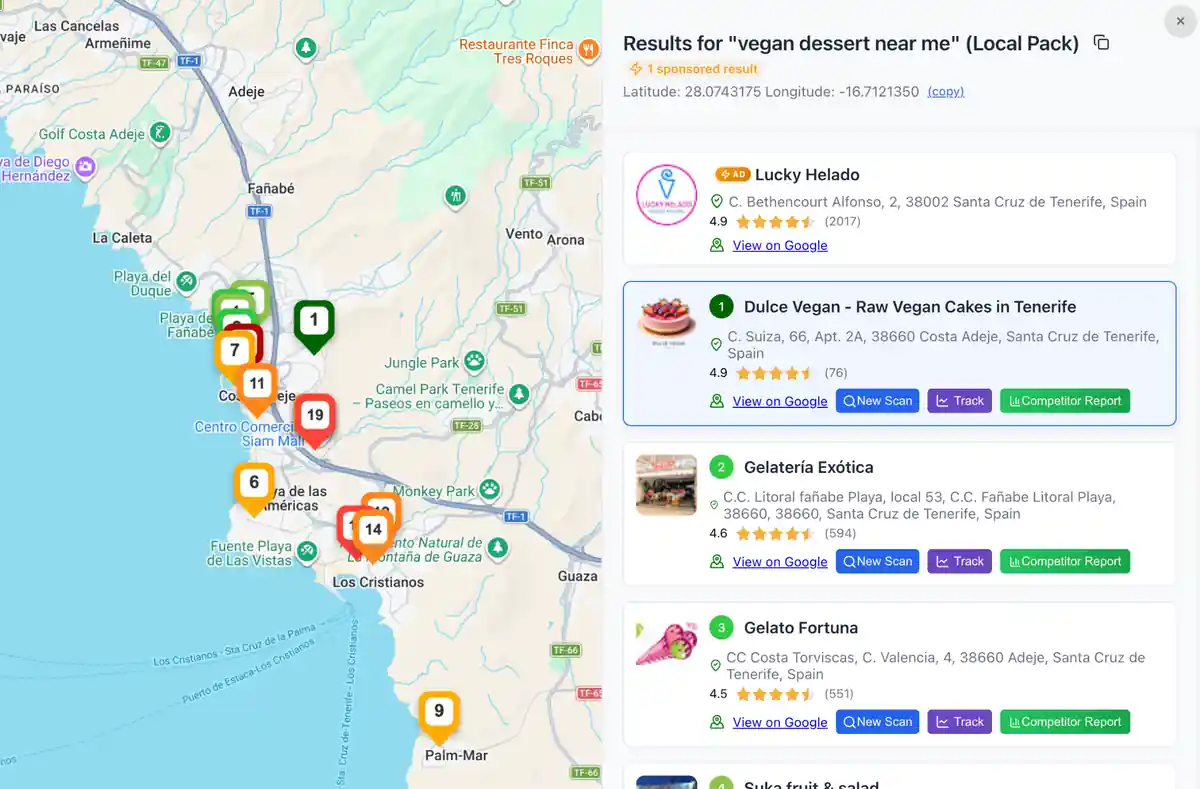
A business can look “#1” from one street and disappear two miles away. That is why real local SEO is about building a system: strong business profiles, consistent listings, review momentum, location-aware content, and ongoing tracking that reveals where you win and where you are invisible.
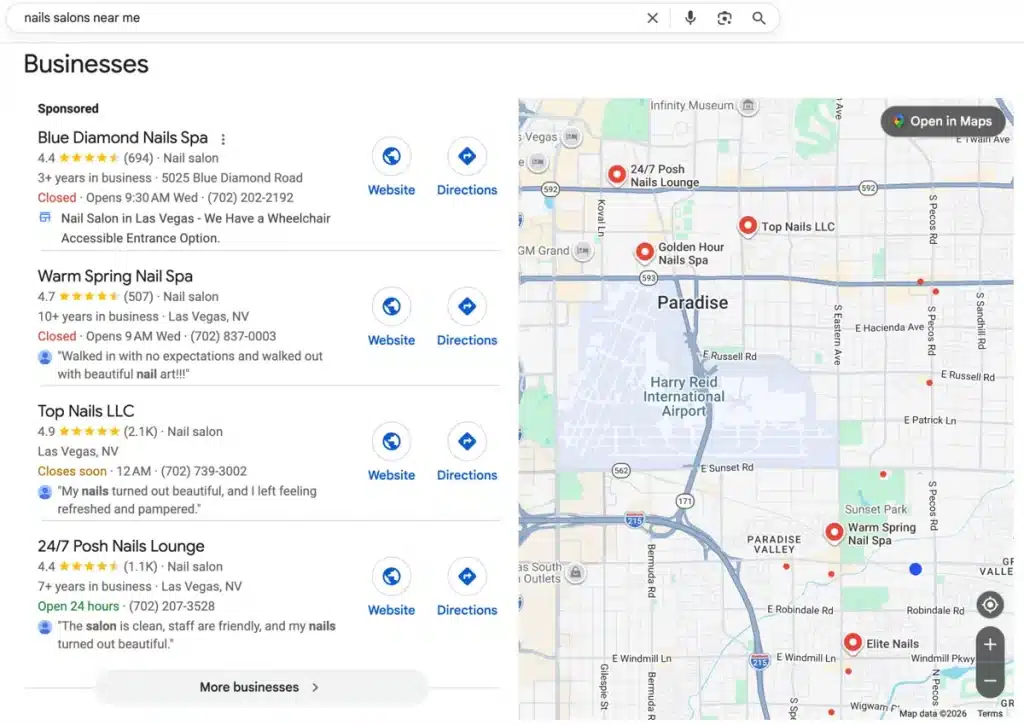
If someone searches for “best pizza near me” or “dentist in downtown,” they want a nearby option they can trust. Search engines respond by showing map results, business listings, and localized organic pages. To fully understand how map rankings differ from organic listings, review the differences between Google Maps and the Local Pack. Google officially explains how local results are ranked based on relevance, distance, and prominence in its local ranking factors documentation. Your job with local SEO is to make it obvious that your business deserves to be shown.
How Local SEO Drives Real Visibility
This guide explains how local SEO works, what influences rankings in map results and localized organic search, and what you should optimize to build stable visibility over time. You will learn how local rankings are decided, why they fluctuate, what the core tasks are, and how to measure progress without guessing.
TL;DR: Local SEO helps local businesses appear in map results and location-based searches by improving relevance, proximity signals, and prominence. The best results come from optimizing business profiles, building consistent citations, earning reviews, creating localized pages, and tracking performance across multiple neighborhoods instead of relying on a single “rank.”
Why Local SEO Matters
Without local SEO, your business can be invisible at the exact moment people are ready to buy. Local searches typically happen when the customer has strong intent: they want to call, book, visit, or compare options right now.
If competitors have stronger listings, more reviews, better location pages, and clearer service signals, they will win the click, the call, and the customer.
🎯 Targeted Visibility
Reach customers searching for your services in the exact areas you serve.
📈 Long-Term Growth
Build steady leads without relying only on paid ads.
🏆 Competitive Advantage
Identify gaps where competitors are weak and claim that demand.
💰 Better Conversions
Show up when searchers are ready to take action, not just browse.
How Local SEO Works
Search engines use a dedicated local ranking system to decide which businesses appear in map results and localized listings. Local rankings are not “one fixed position.” They change based on where the search happens, what device is used, and how search engines interpret the intent.
To understand how local SEO works, you need to understand what the local system is trying to do: match a search query with the most relevant business, closest to the searcher, with the strongest trust signals.
Key Insight
Local SEO is not about chasing a single ranking. It is about earning consistent visibility across the areas that matter, by strengthening the signals that prove your business is the best match for local demand.
The Three Core Local SEO Ranking Factors
1. Relevance
Relevance is about a match. Search engines assess whether your business is a strong fit for the specific query.
- Primary and secondary business categories
- Services and products listed
- Business description and attributes Business description and profile attributes
- Website content and on-page signals
- Structured data (schema)
If a user searches for “emergency plumber,” a business that clearly states emergency plumbing services will typically outperform a generic home services listing.
2. Proximity
Proximity is the location factor. Search engines attempt to show options that are near the searcher or near the location mentioned in the query.
- The searcher’s location at the time of the search
- The business address or service area signals
- Consistency of address across the web
You cannot “optimize” proximity in a direct way, but you can improve how clearly your location and service coverage are understood.
3. Prominence
Prominence is about trust and reputation. If multiple businesses are relevant and close, the most trusted and well-known options usually rise.
- Review quantity, quality, and recency
- Mentions across reputable websites
- Links to your website
- Brand searches and engagement
- Local citations and consistency
If you're building authority through reviews, understanding why Google reviews matter will clarify how they impact both rankings and conversions.
Local SEO Success Signals
Strong category alignment, complete business information, steady reviews, consistent listings, localized content, and real authority from local mentions and links.
Local SEO vs Traditional SEO
Traditional SEO focuses on ranking web pages broadly, often without a location requirement. Local SEO focuses on ranking a business entity and its location-based relevance.
Traditional SEO is heavily website-driven. Local SEO is a blend of website authority plus business listing strength, reviews, and geographic signals.
This is why a business can sometimes rank in local map results even with a weak website, but it is also why a strong website alone may not win if the business profile and reputation signals are weak.
Key Tasks Involved in Local SEO
There are many ways to improve local rankings, but most winning strategies are built from a few core tasks. You can start with these and expand once your foundation is strong.
- Optimize your business profile
- Research local keywords
- Analyze competitors in your area
- Build and clean up citations
- Earn and manage reviews
- Optimize your website for local intent
- Create location pages and local content
- Build local links and community mentions
- Track results across neighborhoods
Optimize Your Business Profile
A business profile is one of the most important local SEO assets because it feeds map results and local listings. You can manage and update your listing through the official Google Business Profile dashboard.
A strong profile includes accurate, complete, and regularly updated information. If your listing is not filled out, follow a complete profile optimization checklist to avoid missing key ranking signals:
- Business name, address, and phone number
- Correct categories and services
- Hours and holiday updates
- High-quality business photos and videos
- Regular updates and Google Posts
- Questions and answers
- Active review responses
Even small improvements here can create noticeable visibility lifts, especially in less competitive markets.
Local Keyword Research
Keyword research for local SEO is about identifying how real customers describe their needs.
Start with transactional phrases that signal a customer is ready to take action:
- “service near me”
- “service in [city]”
- “best [service] in [area]”
- “[service] open now”
Then expand into supporting terms that build topical authority, such as FAQs, comparisons, and guides relevant to your local market.
Competitor Analysis
Your offline competitors are not always your online competitors. With local SEO, you must identify who is ranking for your keywords in the areas that matter.
Look for patterns:
- Do top businesses have far more reviews?
- Are they using stronger categories?
- Do they have optimized location pages?
- Are they earning links from local websites?
Competitor analysis is not about copying. It is about discovering the specific signals that your market is rewarding right now.
Build and Maintain Citations
Citations are online mentions of your business information. They help confirm that your business data is real and consistent.
Focus on:
- Consistency of name, address, and phone number
- Removing duplicates
- Updating outdated listings
- Using trustworthy directories and local platforms
Citations alone do not guarantee rankings, but inconsistencies can absolutely hold you back. If you are building from scratch, review how to build and optimize citations correctly.
Reviews and Reputation Management
Reviews influence rankings and conversions. In local results, they are often the deciding factor when multiple businesses look similar. A structured approach to getting more Google reviews can dramatically improve both visibility and conversions.
A practical review system includes:
- Asking customers at the right moment
- Making the process easy
- Responding to every review
- Handling negative feedback with calm, helpful responses
- Monitoring review velocity and quality over time
Practical Tip
If you want faster momentum, focus on review recency and response rate. A steady stream of new reviews plus active replies often outperforms an old profile with a large but stagnant review count.
Website Optimization for Local SEO
A detailed breakdown of UX and behavioral signals shows how engagement impacts local performance. Websites help convert traffic into leads, but they also help search engines understand your services and your relevance to local intent.
Core on-page improvements for local SEO include:
- Optimized titles and meta descriptions
- Clear service pages
- Mobile-friendly design
- Fast page speed
- Clean internal linking
- Local business schema
- Clear contact and location details
Once your foundations are solid, content becomes the growth lever.
Location Pages
If you serve multiple cities, neighborhoods, or business locations, location pages are essential.
A strong location page should include:
- Unique content written for that area
- Local proof (testimonials, examples, photos)
- Service details tied to the location
- Directions, parking info, landmarks
- Clear calls to action
Avoid creating dozens of duplicate pages with only the city name swapped. That strategy usually produces weak results and can create quality issues.
Create Local Content That Builds Authority
Local content helps you rank for broader local searches and builds trust with real customers.
Examples of effective local content:
- Neighborhood guides and “best of” lists
- Local FAQs specific to your area
- Service explainers with local context
- Event partnerships and community highlights
- Case studies from local customers
This content increases your topical authority and gives other local websites a reason to mention and link to you.
Local Link Building
Local links are a strong signal of prominence. They show that trusted local sources recognize your business.
Practical link ideas:
- Local sponsorships
- Community events
- Partnerships with nearby businesses
- Local news mentions
- Industry associations
Essential Local SEO Checklist
Complete business profile, consistent citations, steady reviews, location-aware website pages, local content that answers real questions, and local links that prove prominence.
Tracking Local SEO Performance
Tracking is where most businesses either win or waste time. If you only check one ranking from one spot, you will miss the real story. Using a local rank tracker allows you to see visibility across a full grid instead of relying on a single position.
A complete tracking system should measure:
- Visibility in map results and localized organic results
- Performance across different neighborhoods
- Website traffic and conversions
- Calls, direction requests, and form submissions
- Review growth and sentiment trends
Advanced visibility tracking for maps can be explored in this guide to master local maps SEO. When you track correctly, you can stop guessing and start improving the areas that actually generate leads.
Common Local SEO Mistakes
- Inconsistent business name, address, or phone number across the web. In serious cases, spam or violations may even lead to a profile suspension.
- Wrong primary category or unclear services. Incorrect setup is one reason businesses ask why their business is not showing on Google.
- Ignoring reviews or responding poorly
- Thin or duplicated location pages
- No local content strategy
- No local links or community mentions
- Tracking only one “rank” instead of area visibility
Local SEO for Different Business Types
Service Area Businesses
Service-area businesses must clearly communicate where they work and back that up with content, reviews, and consistent listings. Strong service pages and local proof matter more than flashy design.
Multi-Location Brands
Multi-location businesses need structure: accurate listings for each location, unique location pages, and consistent brand signals across all profiles. For businesses wanting a more structured growth plan, professional SEO services for local growth can accelerate results.
Local Retail
Retail businesses benefit from product-focused content, local promotions, and photo updates that keep listings fresh and engaging.
Final Takeaway
Local SEO drives growth by making your business visible in the places your customers search. The businesses that win are the ones that build consistent trust signals over time: complete profiles, steady reviews, accurate citations, localized pages, and tracking that reveals real market coverage.
Frequently Asked Questions
1. How long does local SEO take to work?
Most businesses see measurable improvement within 3 to 6 months, depending on competition, current profile strength, and how consistent the optimization work is.
2. What is the difference between local SEO and traditional SEO?
Traditional SEO focuses on ranking web pages broadly. Local SEO focuses on ranking a business in location-based results, using profile strength, reviews, citations, and geographic relevance.
3. Can local SEO work without a website?
A business can appear in map results with a strong profile, but a website usually improves authority, conversions, and long-term ranking stability.
4. Why do local rankings change between neighborhoods?
Local results are influenced by proximity and local competition. A business may rank well in one area and not another because the search engine is trying to show the closest and most trusted options for each location.
5. Are reviews really that important for local SEO?
Yes. Reviews influence prominence, click-through rates, and trust. Consistent review growth and active responses are often tied to better visibility.
6. Do citations still matter?
Yes. Citations validate your business information and help prevent confusion across the web. Inconsistencies can reduce trust and limit visibility.
7. What should I focus on first?
Start with your business profile (complete information, correct categories), then citations consistency, then review momentum. After that, improve your website and publish localized content.
8. How do I measure local SEO success?
Measure visibility in map and localized results across different areas, then connect that visibility to real outcomes: calls, direction requests, bookings, and sales.
9. Can local SEO help multi-location businesses?
Yes. Multi-location strategies depend on having clean listings per location, unique location pages, and consistent brand signals across all locations.
10. What hurts local SEO the most?
Inconsistent business data, weak review activity, wrong categories, duplicated location pages, and lack of local authority signals (mentions and links) are some of the biggest blockers.