If you have more customer reviews and endorsements than your competitors, people are naturally inclined to choose your product or service over theirs. It feels logical, right? Reviews act as modern word-of-mouth, shaping trust, credibility, and purchasing decisions long before a customer ever contacts you.
Yet the reality is simple: most customers will not leave a review unless you ask. They are busy, overwhelmed by information, and focused on their daily priorities. Even satisfied customers rarely think about leaving feedback on their own. That is exactly why review requests are one of the most powerful and underused growth tools available to businesses today.

Why review requests matter more than ever in 2025
In 2025, reviews are no longer optional reputation assets. They directly influence visibility, conversions, and local rankings, especially when paired with a properly set up Google Business Profile and a fully completed profile.
Search engines, marketplaces, and consumers all reward businesses that consistently collect fresh, authentic feedback. Without structured review requests, even excellent businesses risk being invisible online.
When you ask, you get more reviews
As Robert Cialdini famously demonstrated, people are far more likely to take action when they are directly asked. In his research, compliance increased by over 77% simply because a request was made. The same psychological principle applies to review requests.
Some industries, restaurants or hospitality, for example, receive reviews naturally. Others, such as gyms, car rentals, landscapers, or B2B services, struggle to receive feedback unless they actively request it. This imbalance often results in businesses with great offline reputations appearing weak online.
Review requests correct negative-only review patterns
Customers are far more motivated to leave feedback when something goes wrong. Without proactive review requests, your online presence can become skewed toward negative experiences. Asking satisfied customers for reviews restores balance and accurately reflects the quality of your business.
So what should business owners do when they realize their online reputation does not match reality? They should systematically ask happy customers for reviews.
Tools like Wiremo Campaigns make this process scalable and easy by sending follow-up requests after purchases or completed services.

Best practices for effective review requests
The most effective review requests feel personal, timely, and respectful. A direct email request from someone the customer interacted with, a support agent, an account manager, or even the business owner, outperforms generic automated messages.
Timing your review requests
The ideal moment to send a review request is right after a positive outcome: successful delivery, completed service, resolved support issue, or repeat purchase.
This timing aligns with peak satisfaction and maximizes response rates.
Automation plays a critical role here. Instead of sending emails manually, review software can trigger personalized requests at exactly the right moment. This is essential for businesses that rely on scale, such as e-commerce, multi-location stores, and service providers.
Review requests best practices checklist
- Use a single, clear call-to-action button.
- Remove unnecessary links or distractions.
- Personalize messages using the customer’s name.
- Test subject lines and copy variations.
- Keep requests short, polite, and human.
Are incentives allowed in review requests?
Incentivizing reviews is a sensitive topic. Directly paying for positive reviews is discouraged and may violate platform policies or consumer protection laws. However, offering small incentives for honest feedback, regardless of sentiment, can be acceptable when handled transparently.
Monthly raffles, loyalty points, or non-conditional rewards often work well. The key is to never pressure customers into leaving only positive feedback.
How review requests support SEO and local visibility
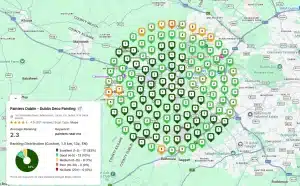
Consistent review requests generate a steady stream of fresh content. This helps with local visibility and strengthens performance in Google Maps and Local Pack results. Reviews also complement broader efforts like local SEO strategies and conversion optimization.
Reviews influence trust signals
Reviews are among the strongest trust signals for both users and search engines. Businesses that collect reviews regularly tend to rank higher, convert better,
and experience fewer customer trust barriers.
What happens after you collect reviews?
Collecting reviews is only the first step. Sharing them strategically across your website, emails, and social channels multiplies their impact. Use reviews on product pages, service pages, and checkout flows to reduce hesitation and increase confidence.
Reviews also support other engagement features such as Google Q&A, business messaging, and visual trust elements like photos and videos.
Why automation is essential for long-term success
Manual review collection does not scale. Automation ensures consistency, reduces human error, and guarantees that no happy customer is forgotten. It also allows businesses to segment review requests by location, service type, or customer value.
Review requests as a growth system
When review requests are treated as a system—not a one-off tactic—they become a compounding growth asset. Over time, they improve brand perception, reduce churn, and increase lifetime customer value.
At Wiremo, everything revolves around customer reviews, their collection, management, and amplification. If you want to turn review requests into a predictable growth engine, Wiremo Campaigns offers a proven, scalable solution.
FAQ: How You Benefit from Review Requests
1. What are review requests?
Review requests are messages sent to customers asking them to share feedback about their experience, usually via email, SMS, or post-purchase follow-ups.
2. Why are review requests important in 2025?
In 2025, reviews directly impact search visibility, conversions, and customer trust. Without asking, most satisfied customers stay silent.
3. When is the best time to send review requests?
The best time is shortly after a positive experience, after delivery, service completion, or successful onboarding.
4. How should review requests be sent?
Email and SMS are the most effective channels. Automation ensures consistency while keeping the message personal.
5. Do customers actually respond to review requests?
Yes. Studies show customers are far more likely to leave a review when asked politely and clearly.
6. Should review requests be automated?
Yes. Automation saves time, ensures consistency, and increases response rates without manual effort.
7. Can review requests improve SEO?
Absolutely. Fresh, frequent reviews improve local rankings and click-through rates, especially on Google.
8. Are incentives allowed for review requests?
Direct incentives for positive reviews are discouraged and often violate platform policies. Neutral incentives (like entry into a draw) should be used carefully.
9. How many review requests should I send?
One primary request with one gentle reminder is ideal. Too many messages can feel spammy.
10. Should review requests be personalized?
Yes. Using the customer’s name and referencing their purchase significantly improves response rates.
11. Can review requests backfire?
Only if they are aggressive, misleading, or too frequent. Respectful requests rarely cause negative reactions.
12. Do review requests work for B2B businesses?
Yes. B2B reviews are extremely powerful because trust plays a bigger role in long-term purchasing decisions.
13. What platforms should review requests link to?
Google, your website, and trusted third-party platforms are the most effective choices.
14. How do review requests affect brand reputation?
They show transparency, customer focus, and confidence, key factors in modern reputation marketing.
15. What’s the biggest mistake businesses make with review requests?
Not asking at all, or asking inconsistently without a clear strategy.