TL;DR
Local SEO tools help you track rankings, audit your Google Business Profile, monitor competitors, manage reviews, and improve visibility in Google Maps and the Local Pack. If you want measurable local growth, the right tools are essential.
If you want to rank higher in Google Maps, you need more than hope. You need the right local seo tools.
Local search is competitive. Businesses fight for the top 3 positions in the Local Pack. Without proper tracking and auditing, you are guessing.
1. What Are Local SEO Tools?
Local SEO tools are software platforms designed to help businesses improve their visibility in local search results. They allow you to monitor rankings, audit your online presence, track competitors, manage reviews, and measure growth inside Google Maps and the Local Pack.
Instead of guessing why you rank where you rank, local SEO tools give you real data. They show what is working, what is weak, and what needs improvement.
In simple terms:
Local SEO answers three important questions:
- Where do I rank?
- Why do I rank there?
- What should I fix to rank higher?
Why Local SEO Matters
Google’s local algorithm is not static. Rankings change based on:
- Searcher location (proximity)
- Relevance of your business categories
- Review signals (volume, recency, velocity)
- Competitor activity
- Google updates
If you are not tracking these factors, you are operating blind.
Local SEO tools turn local marketing into a measurable system instead of a guessing game.
The Difference Between Basic SEO Tools and Local SEO Tools
Traditional SEO focuses on website rankings at a national or global level. But local search works differently.
Traditional SEO Tools Track:
- Organic keyword rankings
- Backlinks
- Website traffic
- Technical SEO issues
Local SEO Tools Track:
- Google Maps rankings
- Local Pack positions
- Geo-grid ranking distribution
- Google Business Profile performance
- Review growth trends
- Citation consistency
Important:
A business can rank well organically but still perform poorly in Google Maps. Local SEO tools focus specifically on map visibility.
Core Categories of Local SEO
Most professional local SEO includes five major components:
1. Rank Tracking Tools
These show how your business ranks for important keywords in your city or service area.
2. Audit Tools
These analyze your Google Business Profile, website signals, and citation accuracy to find weaknesses.
3. Citation Monitoring Tools
These scan directories and listings to ensure your business information is consistent.
4. Review Management Tools
These help you generate, monitor, and respond to customer reviews.
5. Competitor Analysis Tools
These compare your business to competitors to reveal ranking gaps and opportunities.
Who Should Use Local SEO Tools?
Local SEO is not only for agencies. They are valuable for:
- Small local businesses
- Service area businesses (plumbers, electricians, roofers)
- Medical practices
- Law firms
- Franchises
- Multi-location brands
- Digital marketing agencies
If your business depends on local customers finding you online, local SEO tools are essential.
How Local SEO Tools Connect to Revenue
Visibility leads to clicks. Clicks lead to calls. Calls lead to customers.
Local SEO helps you improve:
- Google Maps impressions
- Direction requests
- Phone calls
- Website visits
- Bookings
Without measurement, you cannot improve these metrics consistently.
Bottom Line:
Local SEO tools are not just reporting software. They are growth systems. They provide the data needed to increase visibility, improve map dominance, and generate more local customers.
2. Local SEO for Rank Tracking
Rank tracking is the foundation of every local SEO strategy. Without tracking, you do not know if your visibility is improving or declining.
Local SEO tools provide specialized rank tracking designed specifically for Google Maps and the Local Pack, not just traditional website rankings.
Why Rank Tracking Matters:
If you cannot measure your rankings across your service area, you cannot improve them strategically.
Why Basic Rank Checkers Are Misleading
Many businesses check rankings by typing a keyword into Google from their office. This creates a false impression.
Local results change depending on:
- The searcher's physical location
- Search history
- Device type
- Time of day
- Competitor proximity
This means you may rank #1 near your office but #8 just two miles away.
Basic rank checkers do not show this variation. Advanced local SEO tools do.
Geo-Grid Rank Tracking Explained
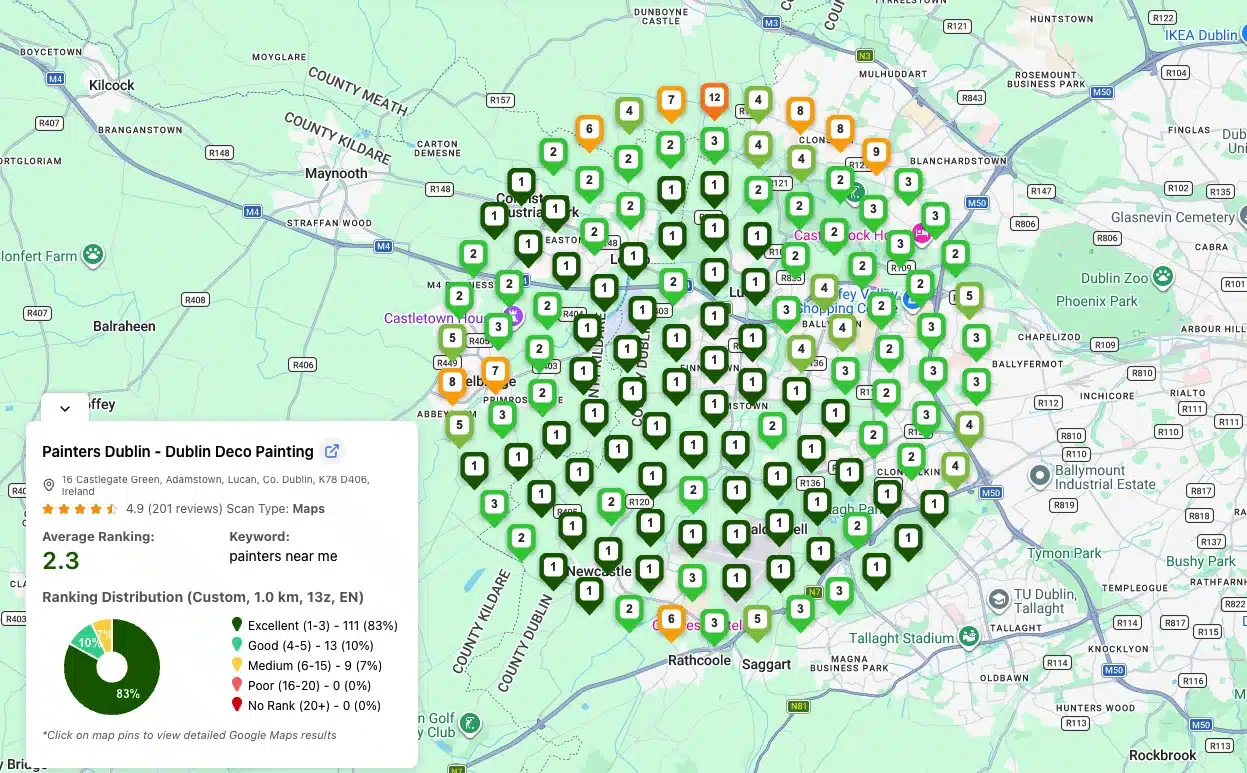
Geo-grid tracking is one of the most powerful features inside modern local SEO tools.
Instead of checking one location, geo-grid tools scan multiple points across a city or service area.
How Geo-Grid Tracking Works
- You define a center point (your business location or service area).
- You choose grid size (for example: 3x3, 5x5, 7x7).
- The tool simulates searches from each grid coordinate.
- You receive a map view showing ranking positions at each point.
What Geo-Grid Data Reveals
- Strong ranking zones
- Weak coverage areas
- Competitor dominance areas
- Ranking drops over time
For example, tools like GTrack use geo-grid rank tracking to visualize how your business performs across an entire service area, not just from one address. This makes it easier to see where visibility is strong and where optimization is needed.
Pro Insight:
Geo-grid tracking shows your true local visibility footprint, not just one ranking number.
Tracking Local Pack vs Organic Rankings
Local search includes different result types:
- Google Maps results
- Local Pack (Top 3 map listings)
- Organic website results
Strong local SEO tools track all three separately.
Why This Matters
You may rank:
- #2 in Maps
- #5 in Local Pack
- #11 organically
Each position has different click-through behavior and traffic impact.
Visibility Score & Ranking Distribution
Modern local SEO tools calculate visibility scores.
Instead of showing only ranking numbers, they measure:
- Average ranking across grid points
- Percentage of top 3 placements
- Percentage of top 10 placements
- Overall map coverage
This helps you understand performance at scale.
Historical Rank Tracking
One ranking snapshot is not enough.
Advanced local SEO tools store historical ranking data so you can:
- See progress month over month
- Identify drops after updates
- Track the impact of optimizations
- Measure competitor movement
Important:
Rank tracking is not about ego. It is about diagnosing problems early and protecting your map visibility before revenue drops.
3. Local SEO for Auditing Performance
Rank tracking shows where you rank. Auditing explains why you rank there.
Strong local SEO analyzes the factors that influence your Google Maps and Local Pack visibility. They identify weaknesses and show clear improvement areas.
Simple idea:
Tracking shows the result. Auditing shows the reason.
Google Business Profile Audit
Your Google Business Profile (GBP) is the main driver of local rankings. Local SEO tools scan important profile elements automatically.
Key GBP Audit Factors
- Primary and secondary categories
- Business description optimization
- Service listings
- Review volume and recency
- Owner response rate
- Photo activity
- Profile completeness
Even small improvements in these areas can increase Local Pack visibility.
Category & Relevance Analysis
Categories are one of the strongest local ranking factors. Many businesses never review them.
Advanced local SEO tools compare your categories with top competitors to find gaps and opportunities.
Review Signal Analysis
Reviews influence both prominence and conversions.
Audit tools measure:
- Total review count
- Review growth speed
- Review recency
- Response consistency
Important:
Consistent review growth often impacts rankings more than total review count alone.
Citation & NAP Consistency Audit
NAP (Name, Address, Phone) consistency builds trust signals for Google.
Local SEO tools scan directories to detect:
- Incorrect business information
- Duplicate listings
- Missing citations
Competitor Gap Analysis
Strong local SEO allows side-by-side comparison with top-ranking competitors.
For example, platforms like GTrack combine geo-grid tracking with competitor comparison, helping businesses understand not just where competitors rank higher, but what profile signals may explain the difference.
Bottom Line:
Local SEO turns ranking data into clear optimization actions instead of guesswork.
4. Local SEO Tools for Review & Reputation Management
Reviews influence both local rankings and customer trust. Strong local SEO tools help businesses monitor, generate, and manage reviews in one place.
Simple rule:
Consistent review growth improves visibility and conversions.
Why Reviews Affect Local Rankings
- Total review count
- Review recency
- Growth speed (velocity)
- Average rating
- Owner responses
Businesses with steady new reviews often outperform inactive profiles.
Review Monitoring & Alerts
Local SEO tools collect reviews from platforms like Google and show them in one dashboard. This allows fast responses and early detection of negative feedback.
Review Generation Tools
Structured systems help increase review volume.
- Direct Google review links
- SMS or email requests
- QR codes
- Follow-up reminders
Managing Negative Reviews
Reputation tools help track complaints and respond professionally. Clear, calm responses protect your brand and build trust.
Some platforms, such as GTrack, connect review performance with ranking insights, helping businesses understand how review growth supports map visibility.
Bottom Line:
Local SEO tools turn review management into a controlled system instead of a reactive process.
5. Local SEO for Competitor Monitoring
You are not competing against Google. You are competing against other businesses in your area.
Strong local SEO tools allow you to track competitors and understand why they rank higher in certain areas.
Simple idea:
If a competitor outranks you, there is always a reason. Competitor tools help you find it.
What Competitor Monitoring Reveals
- Competitor ranking positions
- Map visibility distribution
- Review growth speed
- Category differences
- Profile activity changes
This helps you identify visibility gaps and improvement opportunities.
Tracking Competitor Review Growth
If a competitor is adding reviews faster than you, their prominence signal increases over time.
Local SEO tools help you compare review trends side by side.
Geo-Grid Competitor Comparison
Advanced tools allow you to compare ranking coverage across neighborhoods.
For example, platforms like GTrack combine geo-grid rank tracking with competitor overlays, helping businesses see exactly where competitors dominate and where visibility can be improved.
Bottom Line:
Local SEO tools turn competitor analysis into an actionable strategy instead of guesswork.
6. How to Choose the Right Local SEO Tools
Not all local SEO tools offer the same features. Choosing the right platform depends on your business size, goals, and competition level.
Key question:
Does the tool help you improve visibility, or does it only show basic rankings?
Essential Features to Look For
- Geo-grid rank tracking
- Google Business Profile audit
- Review monitoring and generation
- Citation tracking
- Competitor comparison
- Clear reporting dashboard
If a tool only tracks one location ranking, it is not enough for competitive markets.
Choose Tools Based on Your Needs
- Small businesses need simple rank tracking and review tools.
- Agencies need multi-location tracking and white-label reporting.
- Franchises need territory-wide visibility monitoring.
Scalability & Growth
Your visibility goals will grow over time. The right local SEO tools should scale with you.
Platforms such as GTrack focus on geo-grid visibility tracking and competitor insights, which are especially important in competitive cities where proximity strongly affects rankings.
Final Thought:
Local SEO tools are not optional if local customers matter to your business. They provide the data needed to protect rankings and grow map visibility consistently.
Frequently Asked Questions About Local SEO Tools
1. What are local SEO tools?
Local SEO tools are software platforms that help businesses monitor rankings, audit Google Business Profiles, track competitors, manage reviews, and improve visibility in Google Maps and the Local Pack.
2. Does local SEO directly improve rankings?
Local SEO tools do not change rankings by themselves. They provide data and insights that help you fix weaknesses, optimize your profile, and improve visibility over time.
3. Why is geo-grid tracking important in local SEO?
Geo-grid tracking shows how your business ranks across different locations in your city. Since local rankings change based on proximity, this feature gives a true picture of your map visibility. Tools such as GTrack visualize this data across a grid map, making it easier to identify strong ranking zones and areas where competitors dominate.
4. Are local SEO tools necessary for small businesses?
If your business depends on local customers, local SEO tools are highly recommended. Without tracking and auditing, it is difficult to compete in Google Maps effectively.
5. What features should I look for in local SEO tools?
The most important features include geo-grid rank tracking, Google Business Profile auditing, review monitoring, citation tracking, competitor analysis, and clear reporting dashboards.