Online reputation management is no longer optional. Before customers call, buy, or visit, they search. What they see in search results directly influences trust and decisions.
Online reputation management focuses on shaping how your business appears across search engines, review platforms, and public listings. Customers routinely check reviews and brand mentions before committing, especially when comparing similar businesses.
Why reputation matters
A strong online reputation builds confidence long before a customer visits your website. Search results, reviews, and public mentions form a first impression that influences trust, perceived credibility, and buying intent.
When potential customers see consistent positive feedback and professional responses, uncertainty is reduced and decision-making becomes easier. In competitive markets, reputation often becomes the deciding factor.

What Online Reputation Management Really Includes
Online reputation management combines monitoring, response, and visibility control. It ensures that accurate, up-to-date information appears when people search for your business.
This includes managing customer feedback, optimizing your Google Business Profile, and making sure positive signals outweigh outdated or misleading content.
- Monitoring reviews and brand mentions
- Responding publicly to customer feedback
- Encouraging authentic customer experiences
- Strengthening visibility in search results
How Online Reputation Management Impacts Search Engine Visibility
Search engines aim to surface businesses that users trust. Reputation signals such as reviews, ratings, and engagement help determine where your business appears.
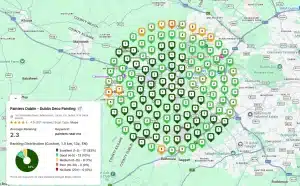
Businesses that actively manage reviews often see better visibility in both organic results and Google Maps. You can clearly track this impact using a Google Maps rank checker, which shows how reputation signals influence local positions.
Search engine insight
Search engines reward consistent trust signals more than one-time optimization. Ongoing review activity, steady engagement, and regular customer feedback indicate that a business is active, relevant, and reliable.
Unlike static SEO changes, reputation signals evolve over time. This consistency helps search engines confidently rank businesses higher, especially in competitive local results.
According to BrightLocal research, most consumers trust online reviews as much as personal recommendations, making reputation management a direct ranking and conversion factor.
How to Reduce the Impact of Negative Search Results
Negative content does not disappear automatically. Ignoring it allows it to dominate branded searches and discourage potential customers.
Effective online reputation management focuses on balance. By generating fresh, positive content and responding professionally, older negative results lose prominence over time.
Learning how to use review management allows businesses to address issues early, before they escalate into long-term reputation damage.
Building a Positive Online Reputation Over Time
A positive reputation is built through consistent engagement. Businesses that actively collect reviews, optimize listings, and communicate transparently build trust faster than competitors.
This approach works best when combined with broader visibility strategies,
such as boosting local SEO rankings and improving how your brand appears across platforms.
Long-term value
Online reputation management compounds over time. Each positive review, response, and customer interaction strengthens trust for future buyers.
As trust accumulates, businesses rely less on aggressive advertising, convert more visitors organically, and build sustainable growth driven by credibility rather than promotion.
Google itself confirms that review quality and engagement matter, especially for local results, as explained in Google’s Business Profile guidelines.
Final Thoughts
Online reputation management is not about hiding criticism or controlling perception. It is about building credibility, trust, and visibility through consistent, honest engagement.
Customers expect transparency. When businesses acknowledge feedback, respond professionally, and demonstrate accountability, trust grows naturally. This trust influences both purchasing decisions and search visibility.
Businesses that actively manage their online reputation protect their brand, strengthen search performance, and convert more customers with less effort. Over time, reputation becomes a competitive advantage that compounds, reducing friction in every stage of the customer journey.
Frequently Asked Questions About Online Reputation Management
1. What is online reputation management?
Online reputation management is the process of monitoring, improving, and protecting how your business appears across search results, reviews, and public platforms.
2. Why is online reputation management important for small businesses?
Because many customers research businesses before buying. A strong reputation builds trust fast, while negative or unmanaged results can stop leads before they contact you.
3. How does online reputation management affect a search engine ranking?
A search engine looks at trust signals like review activity, ratings, and engagement. Consistent positive signals can support visibility in local and organic results.
4. Is online reputation management the same as SEO?
No. SEO improves discoverability, while reputation management improves trust and perception. They work best together because visibility without trust does not convert well.
5. How do you respond to negative reviews correctly?
Respond calmly, acknowledge the issue, offer a resolution, and move the conversation offline when needed. Future customers often judge your response more than the complaint.
6. Can you remove negative reviews from the internet?
Sometimes, but not usually. Most platforms only remove reviews that violate policies. A better strategy is to build strong positive signals that reduce their impact over time.
7. How long does online reputation management take to show results?
It depends on the current situation, but consistent review collection and professional responses typically create noticeable improvement within weeks and stronger results over months.
8. What are the most important reputation signals to monitor?
Key signals include review volume, review freshness, average rating, response rate, brand mentions, and what appears on the first page of branded searches.
9. Should a business respond to every review?
Ideally, yes. Responding to both positive and negative reviews shows customers and search engines that your business is active and engaged.
10. Does having a few negative reviews ruin trust?
No. A realistic mix of feedback often improves credibility. What matters most is how you respond and whether customers see consistent improvement and accountability.
11. How can you build a positive online reputation faster?
Deliver a reliable experience, ask happy customers for feedback, respond quickly, and keep business information accurate across major platforms and profiles.
12. What is the biggest mistake businesses make with reputation management?
The biggest mistake is being reactive only after damage is done. Reputation management works best as a consistent process, not an emergency response.